
The 40% tax has raised concerns, prompting the government through URA to exempt or reduce the VAT tax, noting that councilors are struggling to generate income, making the assumption that councilors earn approximately Ugx 10 million unrealistic.
According to changes in the VAT and PAYE filling template that take effect on October 4, 2022, a summary of changes or enhancements under schedule 1 of the monthly PAYE return, the tax rate for computation of PAYE for employees liable to a fixed rate has been adjusted from 30% to 40%. The changes apply to both residents and nonresidents, where an employee is in secondary employment and whose chargeable income exceeds UgX 10,000,000 per month.
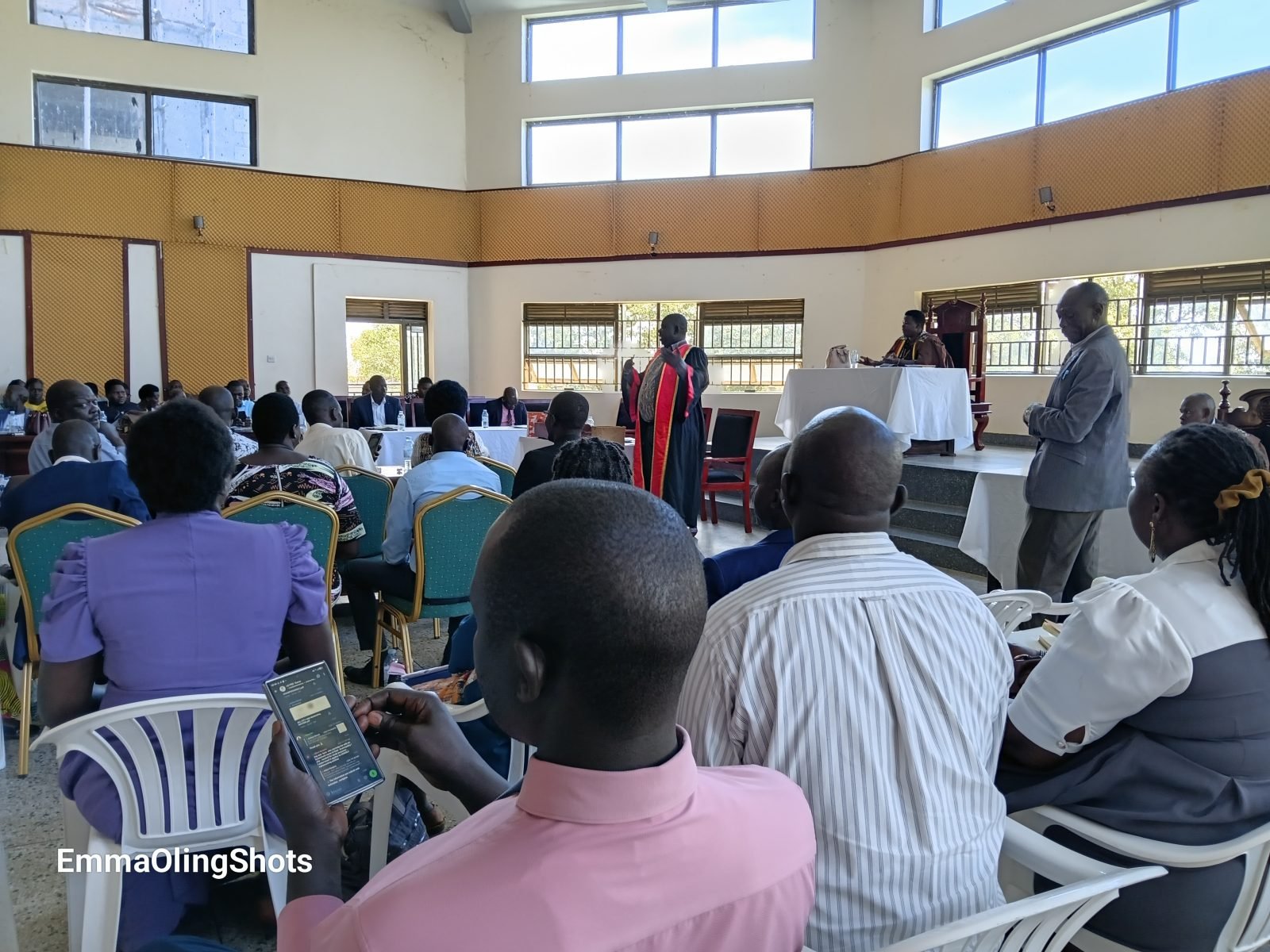
Betty Abur Okumu, District Speaker of Katakwi District Council and Vise Chairperson of Teso Speakers of Teso Region, emphasizes that the umbrella of District Council Speakers of Uganda under UDICOSA to petition the Government of Uganda regarding claims of poor facilitation in their offices, which undermines the effective execution of their mandate as heads of the legislative arm of District Local Governments.
The Uganda Districts Council Speakers Association (UDICOSA) petitioned the Rt Hon Speaker of Parliament of Uganda, the Hon Minister of Local Government, and the Chairperson of the Local Government Finance Commission on September 21, 2026, to address poor office facilitation for District and Deputy Speakers across the country. The petition was signed by Hon Maiku Paul Didi, District Speaker - Obongi.
According to the petition, state-of-facilitation councilors are currently paid meager salaries that are taxed at a high rate of 40%, which is less than a living wage, heavily taxed, and lower than other political leaders in their districts.
In the same petition, speakers petitioned for means of transportation, which, according to the petition, Some district speakers are given old motorcycles, while others are given DMC vehicles in poor mechanical condition, making it impossible to monitor council business or supervise lower local government councils.
It is also stipulated that the office of the deputy speaker has no office space allocated in most districts. Furthermore, a petition highlights that there is no separate budget vote, so the Office of the Speaker operates under the Council vote with no ring-fenced allocation, making the office dependent on the Executive, compromising its independence and oversight role as provided for under the Local Government Act Cap 138.
However, the petitioners ask the government, through the Ministry of Local Government and the Ministry of Public Service, to consider the enhancement of salaries tax inclusive.
Also urged the Means of Transport to the Office of the District Speaker to provide a sound motor vehicle, the Office of the Deputy District Speaker, and a motorcycle, but also the government to provide fuel, servicing, and maintenance budget for the same.
The petition further urged for a separate vote and budget allocation, where a separate budget vote be created to allocate resources for the Office of the District Speaker and Deputy District Speaker to cover salaries, transport, and fuel; office space, furniture, and equipment for both Speaker and Deputy; council sittings; monitoring and capacity building; and staff—clerk to council and support staff
The petition includes an appeal of urgent intervention stating that the Office of the District Speaker is a constitutional office under Article 185 of the Constitution of the Republic of Uganda and Section 13 of the Local Government Act. Its independence and proper facilitation are critical for checks and balances, good governance, and effective service delivery at the district level.
In the same development, the Katakwi district council has revealed a move to petition Uganda Revenue Authority URA to explain the 40 percent seating allowance and transport imposed to councilors with the assumption that they can earn UgX 10,000,000, yet their income doesn't reach the assumed figure.
Geofrey Omolo, LCV chairperson Katakwi, stressed the new policy has shocked the local government councilors, noting that how the tax has been aggregated on them does not match the income. He appealed the tax of 40 percent imposed on the local government, which should be made clear but not just assumptions.
Simon Omer, District Councilor Amusia Sub County, Toroma County, urged the government through members of parliament to review the policy and bail out the local government leaders.
40% Tax Allowance Raises Concerns among Ugandan Lower Councilors, UDCOSA's To Petition Government.
40% Tax Allowance Raises Concerns among Ugandan Lower Councilors, UDCOSA's To Petition Government.
Related Stories

How did this story make you feel?
Comments (0)
Be the first to join the discussion.