
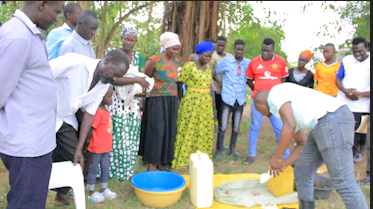
Farmers in Ojom, Oculoi Subcounty, Soroti district attending farmer training
By George Muron
As climate change effects bite, a section of farmers in the Teso sub region are increasingly turning to the use of indigenous knowledge on the natural environment to predict weather patterns and guide their decisions on seed, land preparation for planting and harvesting as they prepare for the anticipated harsh weather conditions.
This follows alleged failure by the department of the meteorological services in the ministry of water and environment to give reliable and accurate weather forecasts to farmers regarding specifications on when the rains will fall, where and what quantities.
Ms Phoebe Ageo, a farmer and a multiplier of indigenous species of crop seeds like grains, legumes and tubers among others from Oculoi sub county in Soroti district said that the department of meteorological services is incompetent as it gives faulty weather predictions that mislead farmers.
“We thought the weatherman was accurate but from the time I started relying on meteorological information, farming has become a gamble because they tell us to plant at a wrong time and the rain disappears leaving us in losses and poor harvests,” Ms Ageo said.
Ms Irene Alupo, another multiplier of indigenous seeds varieties of groundnuts, millet and sorghum and herbal medicinal plants in Ongino Sub County, Kumi district said that she relies on traditional knowledge which involves observing nature and its changes that signal the rainy and drought patterns for timely planting and harvest to achieve quality yields.
According to her, weather forecasts from meteorological services on weather patterns have plunged farmers into losses as dry spells ravage crop field investments worth millions of monies unlike nature that give accurate information for planting seasons.
She said that Farmers make losses because they purely rely on meteorological services which sometimes are not realistic due to climate change factors unlike nature especially observing the behavior of animals both livestock and wild animals, birds, insects, wind movement, the vegetation and observation of the sky which may include understanding the movement of the sun, stars and clouds which signal the rhythm of weather patterns.
“with nature, everything is guaranteed. You need to observe the quantity and direction of the wind, the appearance of certain birds like Abyssinian horn bill, egrets and animals, the shading off of trees, flowering of certain trees, the position of certain stars as well as the behavior of animals and birds like ducks,” Ms Alupo said
She challenged farmers to revive planting indigenous species of trees that hold value in the prediction of rains.
Ms Alupo also blamed farmers for poor management of the soil and seed ahead of planting.
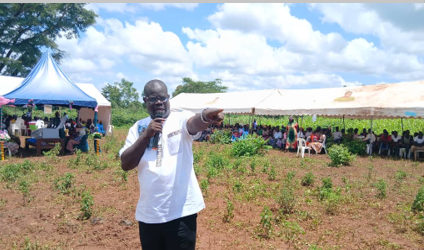
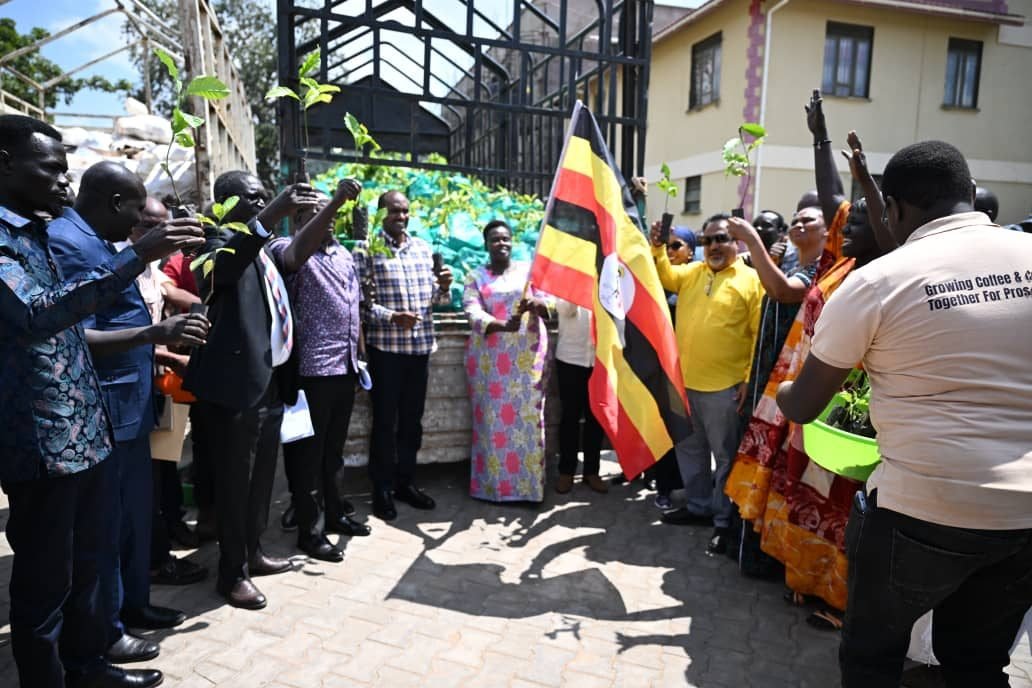
While at Soroti independence gardens for the green action week celebrations organized by Participatory ecological land management (PELUM-Uganda) under the global theme “Sharing communities” at Soroti independence square on Friday, Mr Francis Ediau, the environment officer called upon farmers to integrate indigenous knowledge on weather and modern knowledge to equip themselves with information for quality production of crops.
“when you plant clone eucalyptus, make sure you plant even indigenous species of trees to restore and preserve the environment, and you keep exotic birds and animals, ensure that you maintain indigenous species of livestock and poultry for continuity,” Mr Ediau said.
Mr Bob Owiny, the LC V chairperson Soroti, said that farmers are now gambling in the production process amidst climate change challenges,
He called upon government and partner organizations to support farmers by providing reliable information regarding agricultural production chain in the region and other parts of the country as well as providing market linkage to the produced goods.
Mr Wafula Shraj, a senior metrologist at the department of metrological services in the ministry of water and environment, in response challenged farmers to always pay attention to the weather forecast predictions generated by their department to guide their farming activities.
“the question is, where is the rain? We generated a forecast, but we could not reach out to each individual, but we had warned you that September would continue to be dry although October will have heavy el nino rains which may contribute to flooding in eastern uganda,” Mr Wafula said.
Teso farmers turn to indigenous knowledge on nature to predict weather
Teso farmers turn to indigenous knowledge on nature to predict weather
Related Stories
How did this story make you feel?
Comments (0)
Be the first to join the discussion.